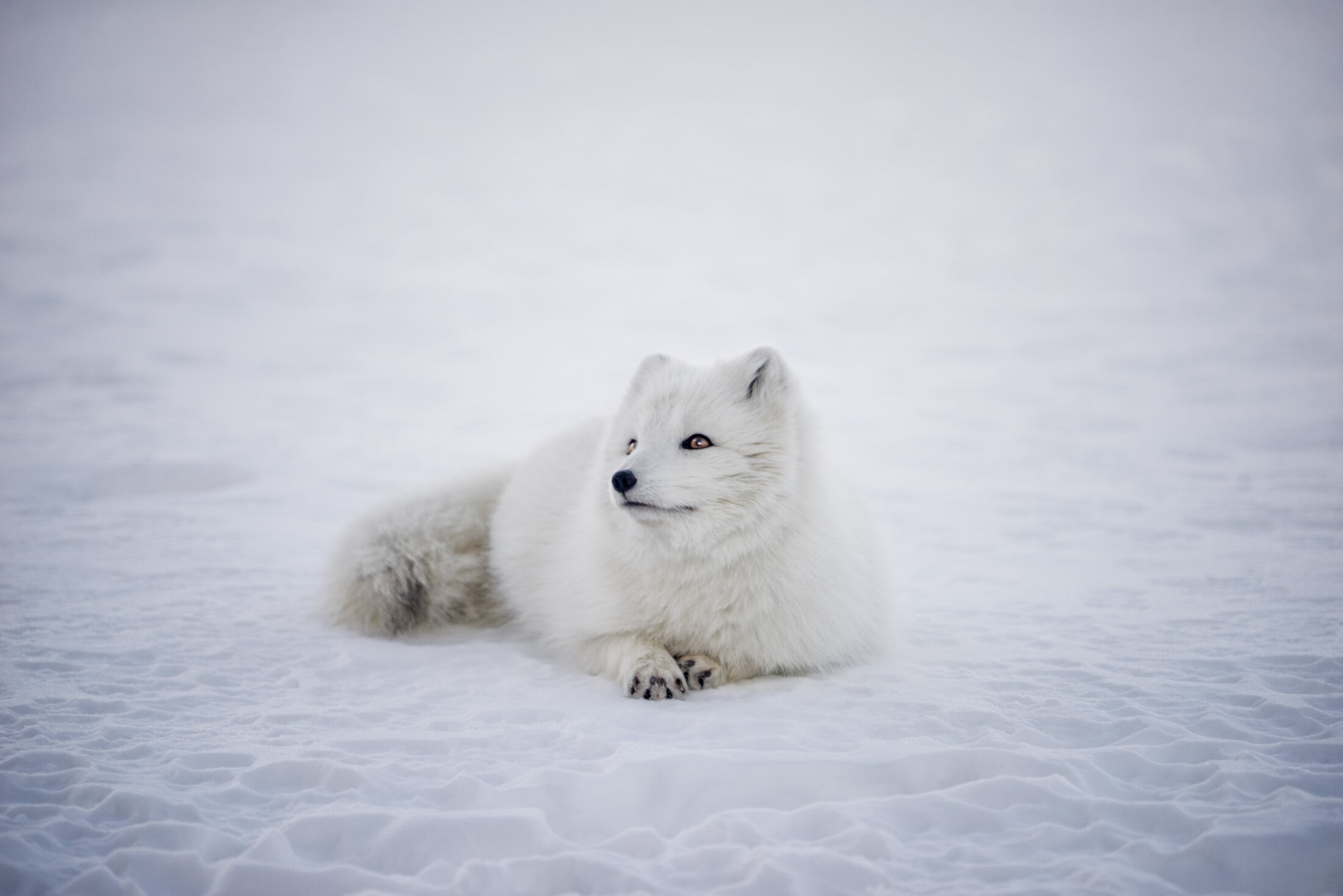
Protection is not a single rule
The Arctic fox presents an unusual conservation case. It is Iceland’s only native land mammal and is not classified as endangered in the country. It is also hunted under a system intended to prevent damage, while selected reserves provide areas where hunting is prohibited.
Those facts are not mutually exclusive. Conservation is the work of deciding what should be measured, where protection is most important, when intervention is justified and how policy should respond when the evidence changes.
The Wildlife Act
Act no. 64/1994 protects wild mammals in their natural environment. Nature reserves and national parks provide the clearest practical refuges, with Hornstrandir the most important for the fox.
Damage prevention
Regulation no. 437/1995 lifts protection from 1 August to 30 April across most of Iceland. From May through July, hunting is restricted mainly to commissioned den work and immediate threats to livestock or eider colonies.
Secure, but not static
Iceland’s fox population is considered viable and the species is not listed as threatened nationally. That broad status should not be confused with a population that never changes. Numbers have risen and fallen substantially over the decades as food, weather, density and human pressure have changed.
The latest assessment therefore describes a marked decline, not an immediate risk of extinction. The distinction matters. Conservation should neither ignore a downward trend because the population remains viable nor turn one estimate into a crisis detached from its ecological context.
How the population is monitored
Iceland’s national estimate depends heavily on cooperation between researchers and hunters. Carcasses submitted from across the country are dissected and aged, while hunting reports record where and when animals were taken. Researchers combine the age structure of that sample with harvest data to reconstruct the size of successive generations.
The method carries an unavoidable delay: the most recent years cannot be estimated securely until the fate of enough young animals is known. New national estimates therefore look three to five years into the past. Alongside population size, examinations record fertility, body condition, diet, disease and contaminants.
A hunted animal can still inform conservation
The monitoring system does not resolve the debate over hunting. It does show that specimens and field knowledge supplied by hunters have become a major scientific record. Good management depends on keeping that record rigorous, representative and open to changing conclusions.
Protect the food web
A fox population cannot be understood separately from the birds, shorelines and seasonal resources that support it. Long-term research links changes in fox numbers to the availability of seabirds along the coast and ptarmigan and migratory birds inland. A den may remain intact while the habitat around it quietly loses value.
That makes prey monitoring part of fox conservation. It also makes simple cause-and-effect claims risky: warming can alter marine and terrestrial food webs in different directions, and the same change may benefit one region while reducing reliability in another.
Hornstrandir: refuge, not stage
Hornstrandir provides more than protection from hunting. Its long-studied territories offer a reference point for understanding fox density, breeding and survival where direct control is absent. The reserve also demonstrates that legal protection alone does not remove human pressure.
Research at breeding dens found that both parents visited less often as tourists spent more time nearby. This matters most from mid-May into early July, when cubs depend on adults returning with food and the family has few options to abandon an established den.
Give the fox control of the encounter
- Keep distance.
Use binoculars or a long lens. Published Hornstrandir guidance advises remaining at least 40 metres from dens.
- Do not feed.
Food changes behaviour, draws animals toward people and roads, and can alter survival and reproduction.
- Leave routes open.
Never stand between a fox and its den, shoreline, cover or intended direction of travel.
- Keep visits short and quiet.
If an animal watches, circles, calls, delays its approach or changes course, increase the distance and leave.
- Protect location data.
Do not publish precise coordinates for active or sensitive dens. A photograph does not need to become a map.
What conservation requires
For Iceland’s Arctic fox, conservation is not one action. It is long-term population monitoring, protected reference areas, management that can respond to evidence, healthy prey populations and visitors who understand that an apparently calm animal may still be changing its behaviour around them.
The standard is not whether people can get close. It is whether the fox can continue feeding, travelling and raising young as if people were not there.
Sources and further reading
The prose above is original and was prepared from the legal, scientific and institutional sources below.
- Alþingi — Act no. 64/1994 on wild birds and wild mammals
- Regulation no. 437/1995 — Arctic fox hunting framework
- Natural Science Institute of Iceland — Arctic fox population monitoring
- Natural Science Institute of Iceland — Melrakki
- RÚV — The 2024 population assessment
- Berthelot et al. — Long-term responses to marine and terrestrial ecosystem change
- Unnsteinsdóttir et al. — Den attendance under increasing tourism